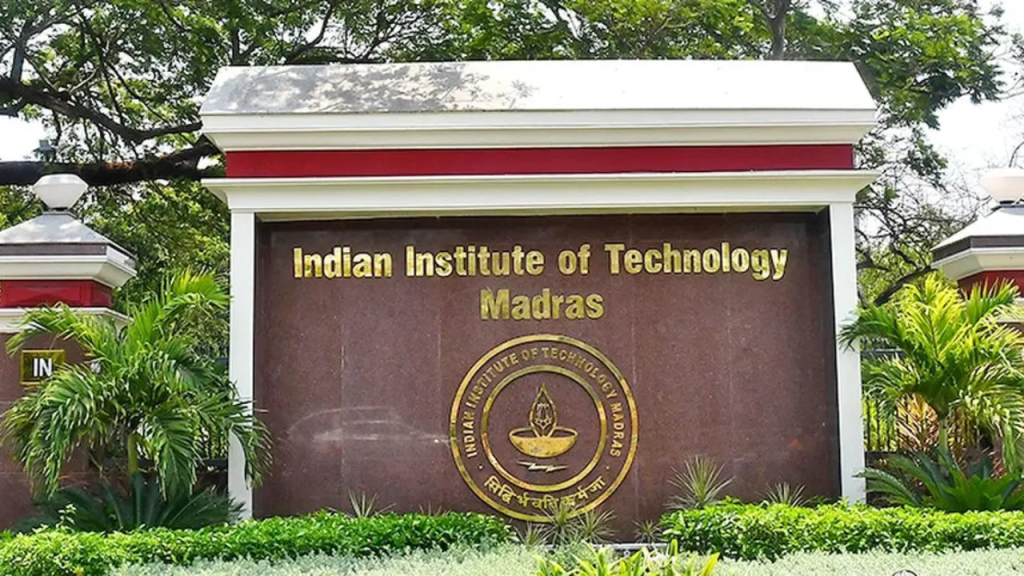
The National Institutional Ranking Framework (NIRF) 2025 rankings were announced on September 4, continuing the government’s initiative to assess Indian higher education institutions based on quantifiable performance factors. The Indian Institute of Technology Madras takes top honors in the overall category for the seventh year running, this time in the number one position. It is trailed by the Indian Institute of Science, Bengaluru, which came in second, and the Indian Institute of Technology Bombay in third position. Other top-notch institutions like IIT Delhi and IIT Kanpur continue just behind in the leading pack, reflecting the sustained dominance of the IITs and IISc in the country’s academic sphere.
In the colleges segment, Hindu College has occupied the leadership position this year, followed by Miranda House at number two and Hans Raj College at number three. This change is specifically significant because Miranda House had been reigning supreme as the top college in the rankings for a very long time. The outcome demonstrates increasing competition among Delhi University’s top colleges and identifies Hindu College’s ascension in terms of academic achievements, research input, and student achievements.
One of the standout aspects of this year’s rankings is the addition of a new dimension aligned with the United Nations Sustainable Development Goals. This marks the first time Indian rankings have specifically credited institutions not only for teaching, research, and placements but also for their contribution towards socially responsible development. This marks a significant shift in the NIRF methodology, one that expands beyond traditional academic success to measuring global social influence.
The rankings also highlight excellent regional performances. Tamil Nadu takes the top position in terms of representation in the top 100 colleges, with a record number of 33 from the state figuring in the list. Delhi is a close second with 32 colleges, showing the capital’s time-tested leadership in higher education. These figures indicate that some regions continue to develop thick clusters of academic brilliance, forming educational hubs that students seek from across the country.
The NIRF 2025 rankings highlight the multidimensional aspect of academic performance assessment. Institutions are evaluated on criteria like teaching and learning resources, research and professional practice, graduation outcomes, outreach and inclusivity, and perception in the academic and professional community. This integration of quantitative data and qualitative evaluation serves to give an overall idea of the performance of Indian institutions in both national and international perspectives.
For parents and students, the rankings serve as an open template to base decision-making on the right choice of higher education. For institutions, the findings serve as recognition and incentive, prompting competition to raise quality, enhance research, and tackle issues of inclusivity and international relevance. The sustained leadership by IIT Madras, the change among Delhi University’s top institutions, and the infusion of evaluation into sustainable development indicators all point to the fact that India’s higher education is not rigid but dynamic in step with international standards.