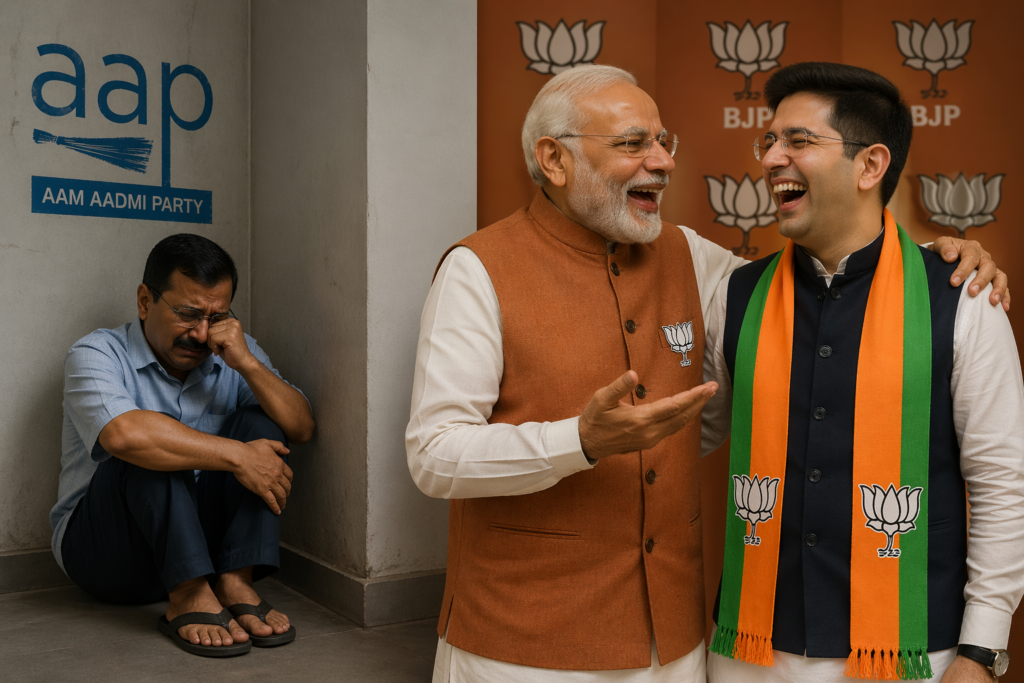
In a dramatic political development that has sent shockwaves across Indian politics, Raghav Chadha and several Members of Parliament from the Aam Aadmi Party (AAP) have officially joined the Bharatiya Janata Party (BJP). The move marks one of the most significant internal splits in AAP since its formation and could reshape the balance of power in the Rajya Sabha.
According to reports, nearly two-thirds of AAP’s Rajya Sabha MPs were part of this political shift, enabling them to merge with BJP under constitutional provisions without facing disqualification under anti-defection laws. This strategic move has raised serious questions about the stability and future direction of AAP.
Raghav Chadha, one of the most prominent young faces of AAP, justified his decision by stating that the party had strayed from its founding principles. He described himself as “the right man in the wrong party,” indicating deep dissatisfaction with the party’s leadership and internal functioning. His exit comes after reported tensions within the party, including disagreements over strategy and his removal from key parliamentary responsibilities.
Several other MPs are believed to have joined him in the switch, including leaders such as Sandeep Pathak and Ashok Mittal. Their collective departure significantly weakens AAP’s presence in the Rajya Sabha, where the party had previously built a growing influence.

The reaction from AAP has been swift and critical. Party leaders have termed the move a betrayal and accused BJP of orchestrating a political strategy to weaken opposition forces. Calls for disqualification of the defecting MPs have also emerged, though the legal standing of such demands remains uncertain due to the scale of the defection.
On the other hand, BJP has welcomed the leaders, viewing the development as a major boost to its strength in Parliament. The party’s increasing numbers in the Rajya Sabha could help it push forward key legislative agendas with greater ease.
This political shift is not just about numbers—it reflects deeper cracks within AAP’s leadership and organizational structure. Analysts believe that this could trigger further exits and realignments in the coming months, especially if internal issues within the party remain unresolved.
As the situation unfolds, all eyes will be on how AAP responds to this setback and whether it can retain its remaining leadership and voter base. Meanwhile, BJP’s gain signals a stronger hold on national politics, further consolidating its influence ahead of future elections.