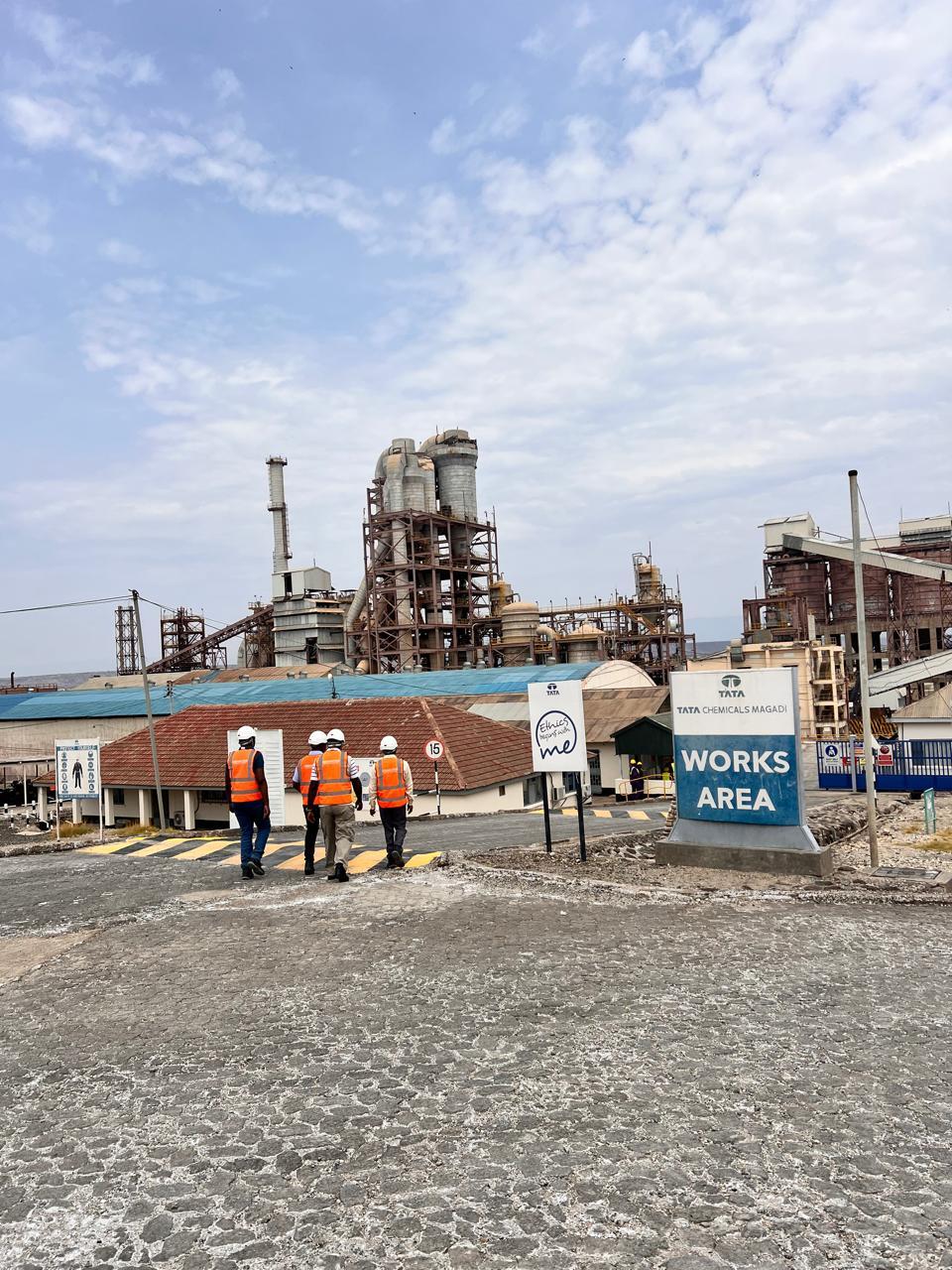
Lake Magadi Tata Chemicals soda ash Kenya
Kenya has ordered Tata Chemicals to end its operations in the country after more than a century of activity at the Magadi Soda facility, with President William Ruto demanding greater local investment and industrial development.
Kenya’s President William Ruto has directed that Tata Chemicals stop operating in the country, marking a major development for the Indian company’s century-old presence in Kenya.
Speaking during a visit to Kajiado in southern Kenya on September 3, Ruto questioned whether the country was receiving sufficient benefits from a long-standing arrangement involving Tata’s operations at Magadi.
The president argued that despite the company’s long association with the region, Kenya had not seen the level of industrial development he expected, particularly in Kajiado County.
Why is Kenya ending Tata Chemicals’ operations?
According to Reuters, Ruto said the company had held a contract for about 100 years but had not built the type of factories or infrastructure he believed should have accompanied its presence in Kajiado.
Ruto also announced plans to bring in two new companies. One would be expected to establish a major glass manufacturing operation in Kajiado, while another would focus on chemical production.
The move reflects the Kenyan government’s broader push to ensure that natural resources and foreign investments generate more visible benefits for local communities and the national economy.
Tata Chemicals’ long history at Lake Magadi
Tata Chemicals’ connection with the Magadi operation dates back much further than its ownership of the business.
The operation was established in 1911 as the Magadi Soda Company. Tata Chemicals acquired the Brunner Mond Group in 2005, bringing the Kenyan operation into the Tata Chemicals group. The business was subsequently renamed Tata Chemicals Magadi.
The company’s facility is located at Lake Magadi in Kajiado County, approximately 120 kilometres southwest of Nairobi.
Tata Chemicals describes the site as Africa’s largest soda ash manufacturing operation and one of Kenya’s leading exporters. The facility extracts trona, a naturally occurring mineral, and processes it into soda ash.
Why is soda ash important?
Soda ash, chemically known as sodium carbonate, is an important industrial material used in products including glass, detergents and various chemicals.
Tata Chemicals has historically exported the majority of the production from Magadi. The company’s own information says more than 95% of its products are exported to markets including Southeast Asia, the Indian subcontinent, Africa and the Middle East.
That makes the Magadi operation important not only to Tata Chemicals but also to Kenya’s export and industrial economy.
Kenya had already suspended operations
The latest presidential order follows an earlier development in July 2026, when the Kenyan government ordered Tata Chemicals’ local unit to suspend operations at the Magadi Soda factory.
The suspension also affected soda ash exports from the facility. Reuters reported that the government subsequently moved toward ending Tata Chemicals’ operations altogether.
Tata Chemicals had not publicly responded to the latest presidential announcement at the time of the Reuters report.
A major change for Kenya’s chemical industry
The proposed replacement of Tata’s operations with new glass and chemical companies could signal a significant change in Kenya’s industrial policy.
Rather than relying primarily on the export of raw or processed mineral products, the government’s approach appears aimed at encouraging more downstream manufacturing inside Kenya.
A glass manufacturing facility, for example, could potentially use soda ash as an important industrial input while creating additional manufacturing activity and employment locally.
The government’s argument is therefore not simply about the future of one foreign company. It is also about how Kenya wants its natural resources to contribute to domestic industrialisation.
Tata Chemicals had continued investing in Magadi
The dispute is notable because Tata Chemicals had announced investments and modernization projects at the Magadi facility before the latest government action.
In July 2025, Tata Chemicals announced the commissioning of a 10-ton-per-hour electric calciner and a 5 MW solar photovoltaic plant at Magadi. The company described the projects as part of its effort to reduce carbon emissions and move toward a lower-carbon operation.
The company had also outlined expansion plans aimed at increasing production capacity at Magadi. A 2024 report said Tata Chemicals Magadi planned a major expansion that could increase soda ash production capacity substantially.
This creates an important contrast in the current dispute: Tata Chemicals has highlighted investment, exports and sustainability initiatives, while Kenya’s president has argued that the country needs substantially greater local industrial benefits.
The future of the Magadi operation is now likely to depend on negotiations between the Kenyan government and Tata Chemicals, as well as the implementation of the government’s proposed replacement industries.
The development could also attract attention from other foreign investors operating in Kenya, particularly companies involved in mining, natural resources and large-scale industrial projects.
For Tata Chemicals, losing the Kenyan operation would mean the potential end of a business relationship that has lasted more than a century. For Kenya, the government sees the move as an opportunity to increase local ownership, manufacturing and economic value from the country’s resources.
The coming months will reveal whether the government can successfully replace the existing operation while protecting jobs, exports and the communities that depend on the Magadi industrial ecosystem.
About the Author