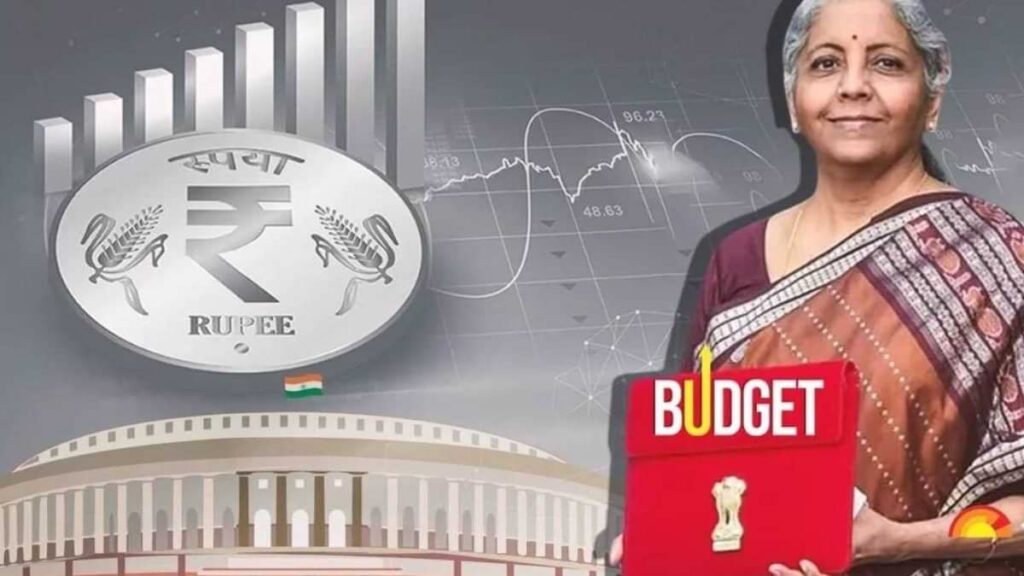
Finance Minister Nirmala Sitharaman presented her historic ninth consecutive Union Budget on February 1, 2026, outlining a roadmap anchored in fiscal consolidation and aggressive capital expenditure. The Budget for 2026-27 emphasizes the vision of a “Viksit Bharat” (Developed India) by 2047, with significant announcements ranging from a massive push for the biopharmaceutical sector to tightening measures in the derivatives market.
Here is a comprehensive analysis of the key announcements and their impact on the economy.

1. Macroeconomic Focus: Capex and Fiscal Discipline
The government maintained its focus on infrastructure-led growth, hiking the Capital Expenditure (Capex) target to ₹12.2 lakh crore for FY 2026-27, an increase of nearly 9% from the previous year. This signals a continued commitment to building long-term assets despite global economic headwinds.
Simultaneously, fiscal prudence remains a priority. The Fiscal Deficit target for FY 2026-27 has been set at 4.3% of GDP, an improvement from the revised estimate of 4.4% for the ongoing fiscal year, underscoring the government’s intent to stick to its glide path of consolidation.
2. Major Schemes and Sectoral Announcements
Biopharma SHAKTI: A ₹10,000 Crore Boost
In a move to position India as a global hub for biologics and biosimilars, the FM announced the Biopharma SHAKTI (Strategy for Healthcare Advancement Through Knowledge, Technology, and Innovation) scheme.
- Outlay: ₹10,000 crore over the next five years.
- Key Initiatives: Establishment of three new National Institutes of Pharmaceutical Education and Research (NIPERs) and upgrading seven existing ones.
- Goal: To shift the industry from volume-based generics to value-based innovation.
Data Centers: Tax Holiday Until 2047
To attract global tech giants, the Budget proposed a tax holiday until 2047 for foreign companies providing cloud services using data centers located in India.
- Condition: The foreign company must use an Indian reseller to service domestic customers.
- Safe Harbour: A 15% margin on costs has been proposed for transfer pricing where the Indian service provider is a related entity.
Semiconductors and Aviation
- ISM 2.0: Launch of the India Semiconductor Mission 2.0 to expand capabilities into equipment, materials, and design.
- Aviation: Focus on indigenous manufacturing of seaplanes and Maintenance, Repair, and Operations (MRO) hubs.
3. Taxation: The Sting and the Relief
Securities Transaction Tax (STT) Hike
In a bid to curb excessive speculation in the derivatives market, the STT on Futures and Options (F&O) has been hiked significantly, triggering a sharp reaction in the markets.
- Futures: Increased to 0.05% (from 0.02%).
- Options: Increased to 0.15% (from 0.1% on premium).
- Impact: Transaction costs for traders will rise, potentially moderating volumes in the F&O segment which has seen explosive growth.
Buyback Tax Changes
Closing a tax arbitrage loop, the Budget proposes to tax share buybacks as capital gains in the hands of shareholders. Previously, companies paid a buyback tax, and the income was tax-free for shareholders.
Customs Duty Relief
- Healthcare: Customs duty exemptions were announced for 17 life-saving cancer drugs, making advanced treatments more affordable.
- Rare Diseases: Exemptions extended to drugs for specific rare diseases.
4. Banking and Financial Reforms
The Finance Minister announced the formation of a “High-Level Committee on Banking for Viksit Bharat.” This panel will comprehensively review the banking sector to align it with the country’s developmental goals.
- Restructuring: The Power Finance Corporation (PFC) and Rural Electrification Corporation (REC) will be restructured to improve efficiency.
- Focus: Enhancing the capacity of the financial sector to fund India’s next phase of growth.
The Union Budget 2026-27 strikes a balance between fueling growth through high capex and maintaining macroeconomic stability. While the hike in STT and buyback taxes may pinch investors in the short term, the strategic investments in biopharma, data centers, and infrastructure lay a robust foundation for a future-ready economy.