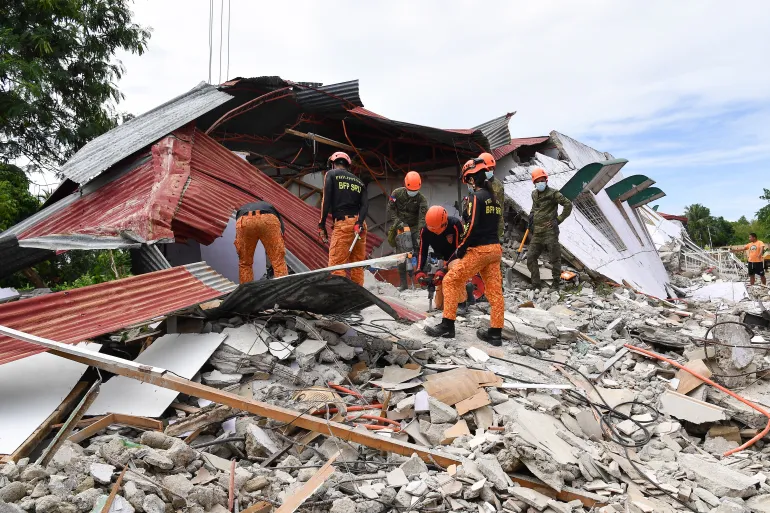
A magnitude 6.9 earthquake struck the central Philippines late Tuesday night, killing at least 69 people and injuring more than 140, according to officials. The quake hit at 9:59 pm local time with its epicentre near Bogo City in Cebu province, at a shallow depth of 10 km, intensifying the damage.
The tremor was followed by multiple aftershocks, some above magnitude 5. An initial tsunami alert was issued for Cebu, Leyte, and Biliran, but later cancelled. Still, authorities placed several towns under a state of calamity, citing widespread power outages, collapsed buildings, and continuing risks.
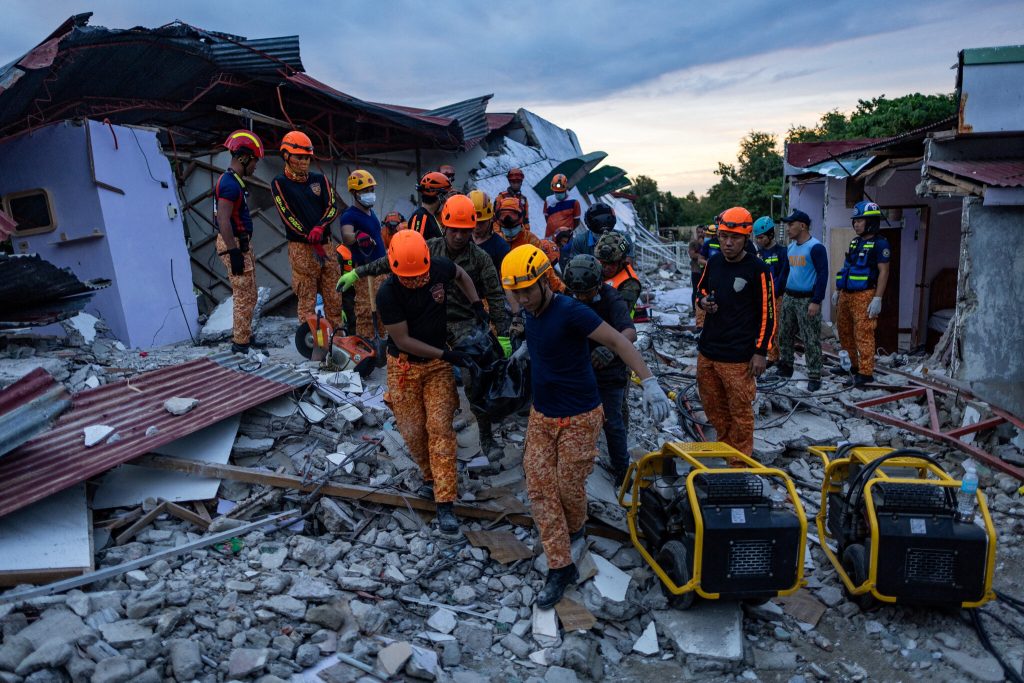
Bogo City, home to nearly 90,000 residents, was the worst affected, reporting more than 20 deaths, including children. Nearby towns such as Medellin, Tabuelan, and San Remigio also recorded fatalities when evacuation centres and sports complexes collapsed. Historic churches, some over a century old, were reduced to rubble — including the Saints Peter and Paul Parish on Bantayan Island and the 139-year-old Sta. Rosa de Lima church in Daanbantayan.
President Ferdinand Marcos Jr. expressed condolences and mobilized national agencies for rescue operations. The Philippine Red Cross reported treating dozens of patients across three provinces. Hospitals in Cebu are overwhelmed but remain functional. Authorities urged residents to stay in open areas and avoid weakened buildings as aftershocks continue.
The Philippines is highly vulnerable to earthquakes as it lies on the Pacific Ring of Fire, a tectonically active region. Experts warn that aftershocks could persist for days, and officials have appealed for urgent aid, including water, medical supplies, and rescue equipment.
This earthquake underscores the nation’s ongoing struggle with natural disasters, highlighting the need for stronger infrastructure and preparedness to protect lives in one of the world’s most disaster-prone regions.