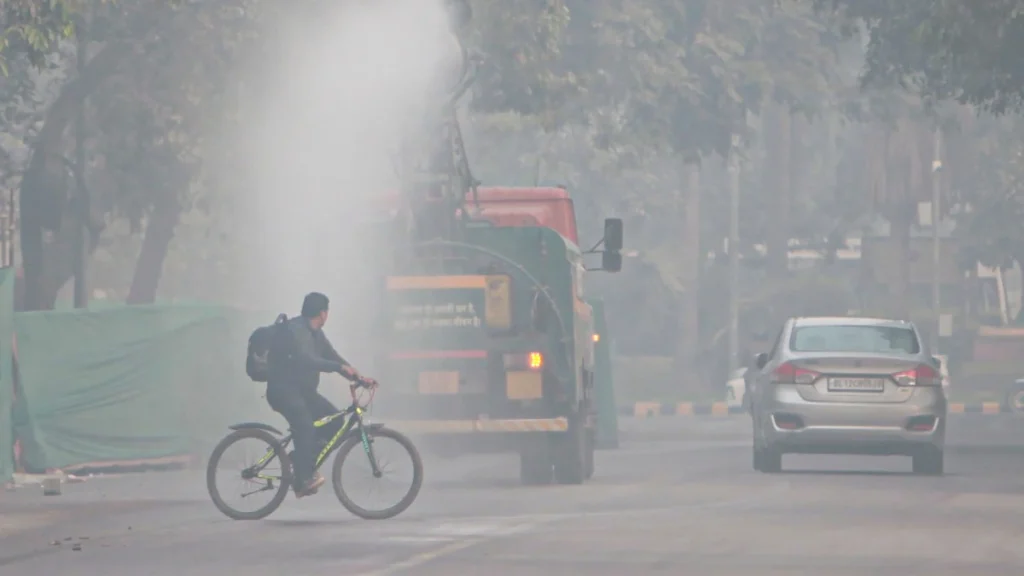
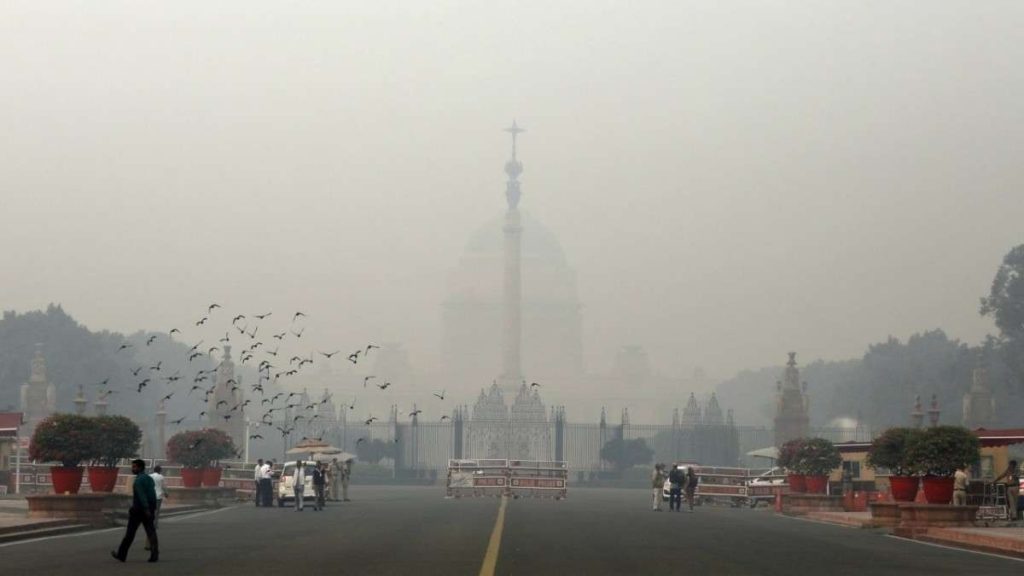
Delhi continues to grapple with dangerously high pollution levels, marking the 15th consecutive day of air quality falling into the ‘Very Poor’ (301-400) category. The Air Quality Index (AQI) has been recorded at a staggering 338, confirming the city is in the grip of a prolonged pollution spell.
Understanding the AQI Categories
An AQI of 338 falls squarely in the ‘Very Poor’ category, which, according to the Central Pollution Control Board (CPCB), means:
- Health Impact: “Respiratory illness on prolonged exposure.”
- Advisory: Everyone, especially children, the elderly, and people with pre-existing lung or heart diseases, should limit outdoor exposure and avoid physical exertion.
Primary Reasons for the Persistent Pollution
The ongoing poor air quality is a result of a combination of seasonal factors and local emission sources:
- Stagnant Meteorological Conditions:
- Low Wind Speed: Calm or slow north-westerly surface winds are preventing the dispersal of pollutants, keeping them trapped near the ground.
- Low Temperatures and Fog/Mist: Lower minimum temperatures and increased mist or shallow fog during the morning hours lead to a high mixing depth, which further restricts the vertical dispersion of smog and particulate matter.
- External and Seasonal Sources:
- Stubble Burning: While the direct contribution varies daily, agricultural residue burning in neighboring states (Punjab and Haryana) remains a major seasonal factor, with north-westerly winds carrying the smoke into the NCR.
- Local Emission Sources:
- Vehicular Emissions: Traffic congestion and a high volume of vehicles, especially those not compliant with stricter emission norms, are a major source of PM2.5 and PM10.
- Construction and Demolition (C&D) Dust: Despite bans, dust from C&D activities is a significant contributor to particulate matter.
- Industrial and Garbage Burning: Emissions from industries in the NCR region and the burning of municipal solid waste and biomass continue to add to the toxic mix.
Government Action Under GRAP
In response to the deteriorating air quality, authorities have been implementing measures under the Graded Response Action Plan (GRAP).
| GRAP Stage | AQI Range | Key Measures (Currently Invoked) |
| Stage I & II | Moderate to Very Poor (101-400) | Mandatory: Intensified water sprinkling on roads, strict enforcement of PUC (Pollution Under Control) norms, ban on DG sets (except for essential services), staggered office timings, and a push for public transport. |
| Stage III | Severe (401-450) | Recently Revoked (but may be re-invoked): Ban on non-essential construction/demolition activities, restrictions on certain categories of vehicles, and the option for 50% staff to Work From Home for public and private offices. |
Health Advisory and Precautions
Given the ‘Very Poor’ AQI, residents, especially vulnerable groups, must take maximum precautions:
- Minimize Outdoor Exposure: Restrict all non-essential outdoor activities.
- Wear a Mask: Use certified N-95/P-100 respirators if you must go outside. Simple cloth masks offer minimal protection against PM2.5.
- Avoid Strenuous Activity: Do not jog, run, or engage in heavy exercise outdoors.
- Monitor Symptoms: Seek prompt medical attention if you experience difficulty breathing, chest constriction, throat irritation, or persistent coughing.
Would you like to know the specific AQI readings for different areas in Delhi, or information on the long-term government plans to address the pollution crisis?