On Sept 26, 2025, the Indian market witnessed a sharp fall, with the BSE Sensex closing down 733 points at 80,426.46 while the Nifty 50 fell 236.15 points to close at 24,654.70. This was the sixth day in a row that both benchmark indices were in the red, indicating continuous negative sentiment on the part of the investors. The day’s trade was extremely volatile with the Sensex plunging more than 800 points intraday before somewhat rallying back, which indicated rampant uncertainty and indiscriminate selling pressure.
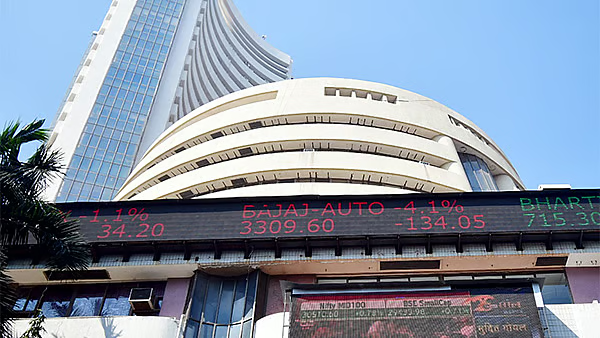
The downfall was prompted by both international and local factors. Internationally, the U.S. government declared 100 percent tariffs on branded and patented drug products from India, having an instant effect on the Indian drug industry. The Nifty Pharma index dipped 2.7 percent, and big firms like Laurus Labs, Biocon, Zydus Lifesciences, and Natco Pharma experienced heavy losses. Besides, the last-minute increase in H-1B visa fees in the US severely impacted Indian IT shares, adding to the weakness in the market. Investors became more concerned about the viability of earnings and export-driven industries’ prospects.
Foreign Portfolio Investors (FPIs) also had a big role in escalating the market fall. FPIs had net sales of around ₹13,450 crore in September alone, perpetuating a pattern of capital outflow that increased concern over the resilience of the market. The Indian rupee also continued to come under pressure, depreciating at near record levels against the U.S. dollar, further sapping investor confidence and contributing to the overall bearish sentiment.

The market indices overall reflected this downtrend, with the S&P BSE Mid-Cap index declining 1.96 percent and the S&P BSE Small-Cap index dropping 2.05 percent. The Nifty 50 constituents that led the list of losers included Mahindra & Mahindra, Bajaj Finance, and Infosys, each of which fell by over two percent in value. The cumulative impact of these falls saw a huge erosion in investor wealth, with almost ₹7 lakh crore lost in a single day’s trading.
The analysts blamed this steep correction as a combination of external uncertainties and domestic economic woes, warning that the market may see sustained headwinds in the near future. The impromptu sell-off highlighted the susceptibility of the investors to geopolitical events, policy shifts, and international economic influences. Experts told investors to be cautious, diversify their portfolios, and closely reevaluate their investing strategies amid volatile market conditions, stressing that the situation warranted prudent and savvy decision-making rather than reactive buying and selling.