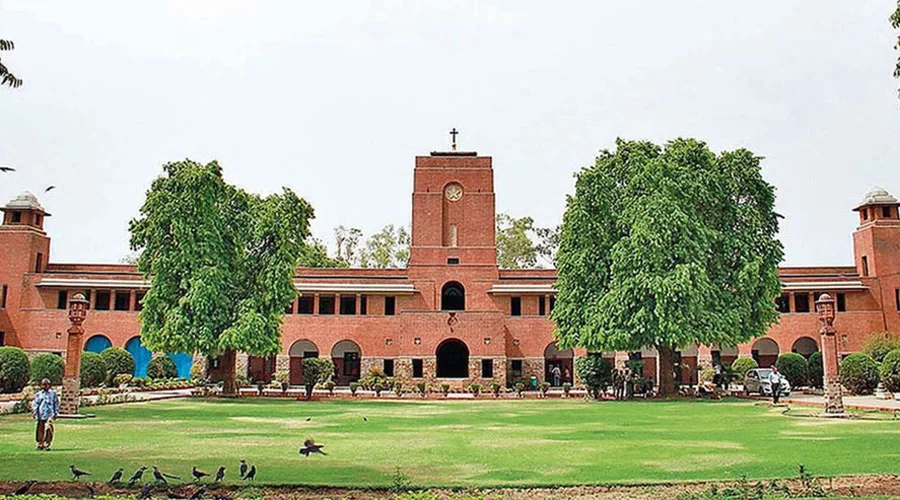
Delhi University’s stellar performance in the National Institutional Ranking Framework (NIRF) 2025 has been characterized by the reign of its iconic five colleges—St. Stephen’s, Hindu, Miranda House, Lady Shri Ram (LSR), and Sri Venkateswara. What distinguished them this year was not merely their long-standing reputation or popularity among students, but the university’s push for research and innovation. In recent years, these colleges have made strategic investments in enhancing research infrastructure, forging collaboration with industry, and persuading undergraduate students to participate in independent projects. This change has enabled them to align better with the benchmarks employed in NIRF, where research and professional practice bear tremendous weight in the score.
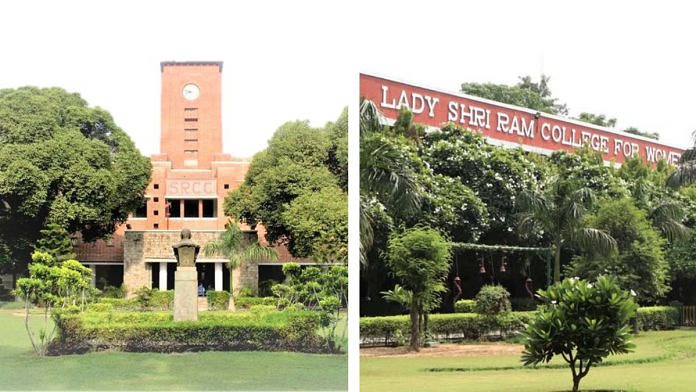
Historically, Delhi University’s colleges have long been famous for their pedagogy, cultural life, and academic strictness but usually fell behind institutions like the IITs or central universities when it came to research output. Realizing this deficit, the administration started encouraging faculty publications, providing research grants, and establishing incubation centers in which both teachers and students could work together on projects. The establishment of research cells and mentorship schemes in all the iconic five colleges made sure that innovation was no longer the domain of postgraduate or PhD research but became a part of undergraduate learning as well.
The payoff for these initiatives was evident in the 2025 rankings. Miranda House continued to maintain its dominance at the top, while St. Stephen’s, Hindu, LSR, and Sri Venkateswara all showed impressive jump in their ranks. Their ascent was not only driven by the volume of publications but also by the quality, as several of their papers found their way into high-impact journals. Patents submitted, collaborations with the industry set up, and involvement in government-sponsored projects further bolstered their research credentials. Consequently, this research culture improved student performance, with graduates more suitably equipped for further study and competitive employment, which feeds into the “graduation outcomes” measurement that underpins NIRF ratings as well.

The focus on research has also started to transform academic culture among Delhi University’s best colleges. Staff are encouraged to become involved in the current social and technological issues, which results in projects varying from renewable energies and digital learning technologies to research in urban inequality and climate resilience. Students, who were previously mainly interested in getting high grades and elite placements, are now being pulled towards inquiry-led learning, finding that their undergraduate days can also lead to knowledge creation.
This shift illustrates the way that Delhi University’s legendary five were able to dominate the NIRF 2025 rankings. By pairing their long-established reputation for academic quality with a strong research agenda, they proved that top undergraduate colleges could be on par with the very best higher education institutions in the nation. The narrative of this achievement is not one of rankings alone; it heralds a cultural transformation wherein research becomes an active choice rather than an afterthought and a strength that marks these colleges as aspirational not only for Delhis’ students but for all of India.