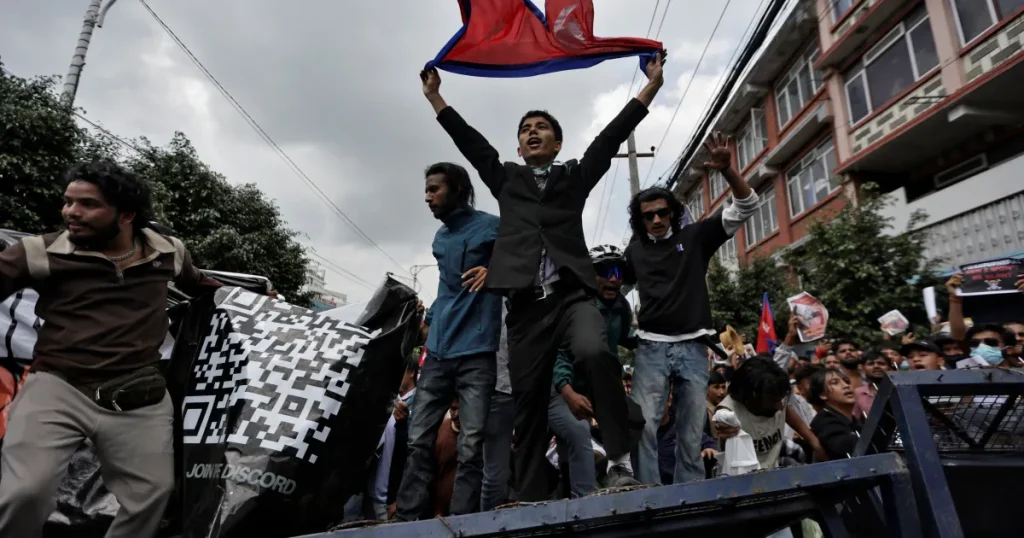
In early September 2025, Nepal was plunged into serious political crisis following the decision by the government to shut down access to between twenty-four and twenty-six of the biggest social media sites, such as Facebook, Instagram, X (or formerly known as Twitter), YouTube, WhatsApp, LinkedIn, Reddit, and Signal. The government justified the action as these companies had not complied with new registration guidelines which, officials said, were intended to stop online fraud, hate speech, and disinformation. TikTok, Viber, and some other platforms escaped the ban by agreeing to register with Nepalese authorities. For many, however, the move was perceived less as a regulatory measure and more as censorship, an attack on freedom of expression, and an attempt by the political establishment to tighten control over online discourse.
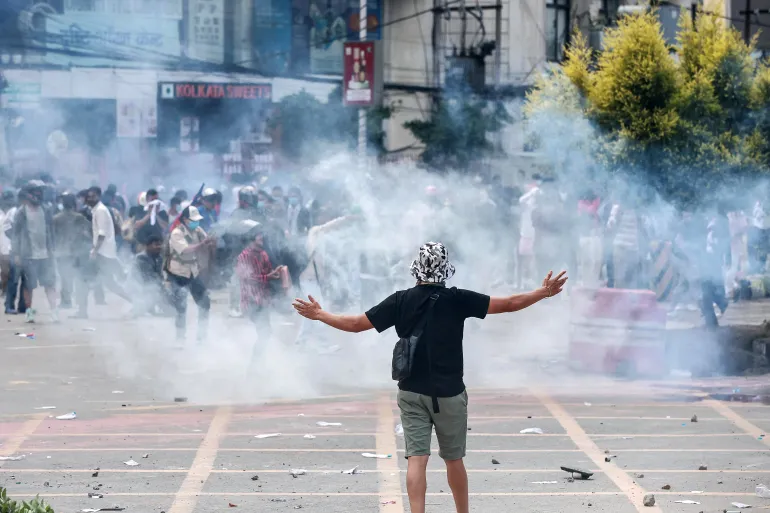
This decision almost immediately triggered widespread discontent, particularly among the country’s youth. The so-called “Gen Z” generation, which is highly dependent on virtual platforms for communication, learning, activism, and business, viewed the ban as a direct attack on their lifestyle. Protests broke out in Kathmandu by September 8, with thousands of protesters—many wearing their school and college uniforms—congregating at Maitighar Mandala before marching towards the Parliament in New Baneshwor. Their signs and slogans demanded that the government roll back the ban and instead tackle corruption and governance flaws. Signs carried the messages like “Stop censoring social media” and “Stop corruption, not social media.” What started as a protest over digital censorship soon swelled into a broader uprising against what protesters termed decades of deep-rooted corruption and political malfeasance. Youth groups like Hami Nepal were in the forefront of mobilizing the movement.
As the protests grew larger and more violent, security forces deployed barriers around the Parliament complex and other key government sites. The police and security forces used greater force when protesters tried to push past the barriers. Tear gas, water cannons, and rubber bullets were used, but these then gave way to live ammunition. National Trauma Centre, Everest Hospital, Civil Hospital, Kathmandu Medical College, and Tribhuvan University Teaching Hospital in Kathmandu reported admitting dozens of gunshot wound casualties, some of them head and chest injuries. The loss of life has been contested, with some sources like Reuters and Al Jazeera putting the minimum number of deaths at fourteen, while the Associated Press estimated up to seventeen deaths, with over 145 injured, including twenty-eight police officers. Other sources like The Guardian and India Times gave a minimum death toll of at least sixteen as the violence spilled out of the capital to other cities. Wikipedia’s collated reports estimated up to nineteen deaths across the country and over 150 injuries.
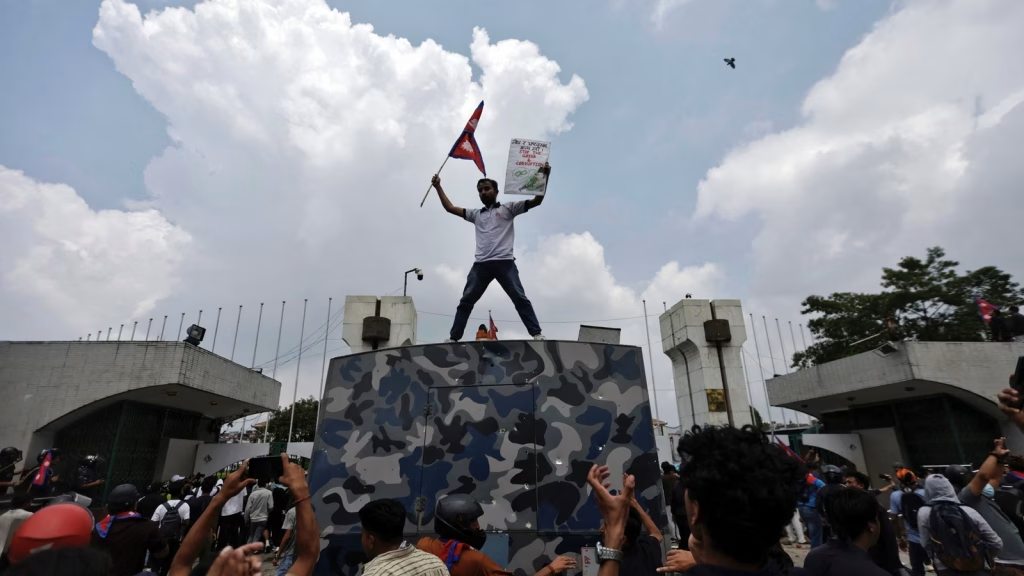
The government, with increasingly swelling unrest before it, put curfews in place in Kathmandu, particularly around the Parliament, the prime minister’s official residence, the presidential palace, and the secretariat of the government. Troops were dispatched to help police maintain order. In spite of these actions, rage continued to build, and the brutality of the crackdown evoked strong rebukes from human rights activists, civil society, and opposition circles. A common refrain among many of the government’s critics labeled its actions as a brazen attack on democratic liberties and an authoritarian overreach that threatened to estrange a generation.
By September 8, what started as opposition to a social media ban had grown into one of Nepal’s most serious crises in recent history. The protests represented a generational rebellion that articulated digital freedom as part of an overall call for accountability, transparency, and reform. The heavy-handed action of the state has created deep wounds, both in terms of lives lost and in terms of political legitimacy of the government. Though the figure of casualties is disputed, one thing is certain: that the protests have ushered in a new and contentious chapter in the political life of Nepal, one in which youth are positioning themselves as a determinative force against censorship, corruption, and authoritarianism.