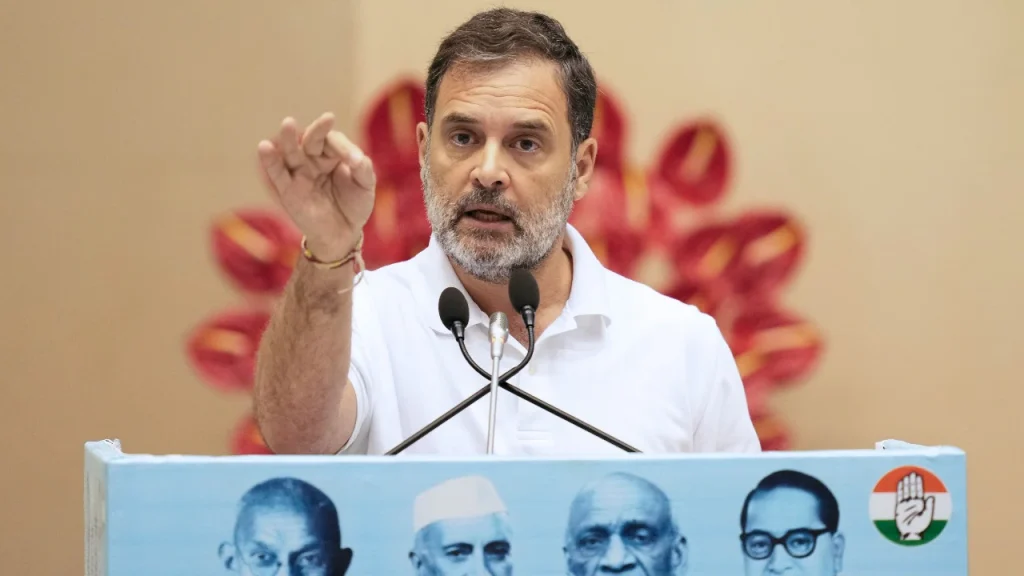
Congress leader Rahul Gandhi has alleged rampant voter fraud in the Mahadevapura Assembly constituency, which is part of the Bangalore Central Lok Sabha constituency, during the 2024 general elections. He argues that a Congress probe uncovered a systematic effort to rig the voter list in the BJP’s favor.
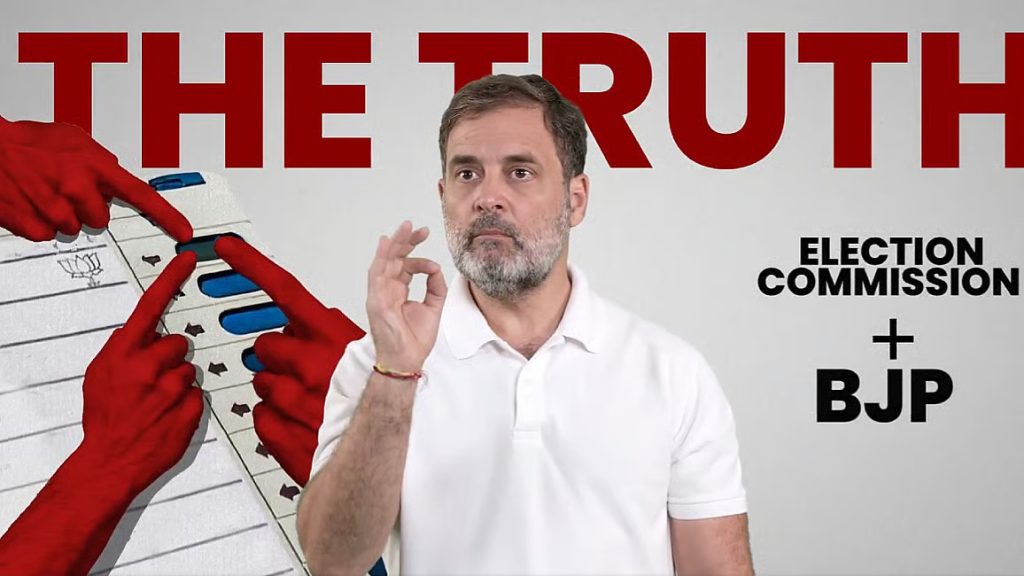
The alleged fraud, according to Gandhi’s charges, involves:
Duplicate electors: 11,965 cases of a single elector being registered in more than one polling booth.
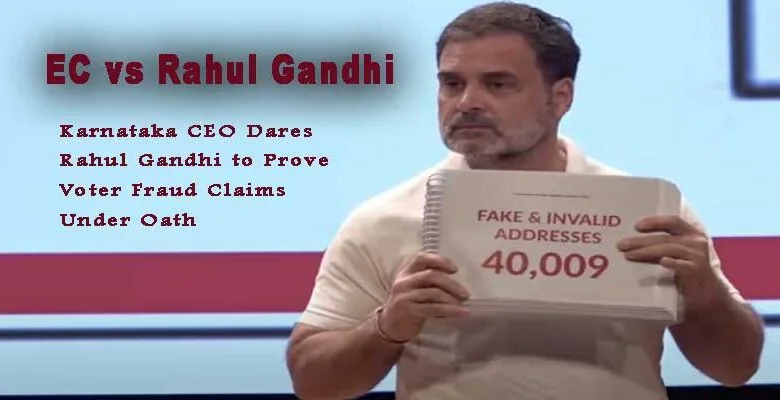
Invalid and duplicate addresses: 40,009 electors registered with fake or non-existent addresses.
Bulk electors: 10,452 electors registered at one address.
Invalid photographs: 4,132 electors with invalid or mismatched photographs on their voter ID cards.
Misuse of Form 6: 33,692 cases of the form, meant for first-time electors, being misused.
He has blamed the Election Commission (EC) for conspiring with the BJP in this so-called scam. The BJP has termed the allegations as “baseless,” reports NDTV.
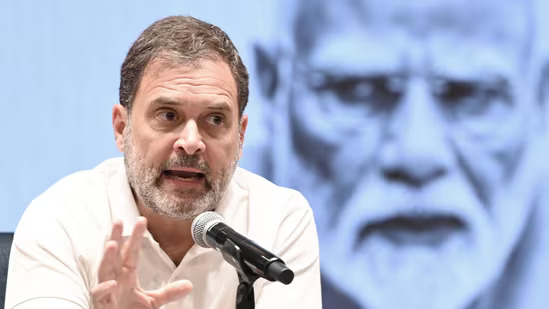
The Election Commission of India has asked Gandhi to give a signed affidavit or oath to substantiate his claims, threatening him that if his charges are found to be untrue, he may be liable under law. But election law experts, The Hindu reports, contend that the rule invoked by the EC does not apply in the current case and can be invoked only when a complaint is made within 30 days after the release of the draft Electoral Rolls prior to elections.
Rahul Gandhi, being a top Indian National Congress leader, has time and again expressed concerns regarding the sanctity of India’s election process. He has repeatedly made statements over the years regarding what he and his party believe are efforts to subvert democracy by way of electoral misconduct. This has included claims of tampering with Electronic Voting Machines (EVMs), voter roll manipulation, quelling opposition voices, and misusing state apparatus during elections. Whereas the incumbent party usually brushes aside these apprehensions as baseless or politically driven, they are at the heart of Congress party propaganda—particularly after elections in which outcomes are either surprising or disputed.
In Karnataka, in particular, these apprehensions have assumed a more tangible format over the past few years. In the 2023 Karnataka Assembly elections, which were won comprehensively by the Congress party, there were several controversies surrounding the manipulation of voter data. One such big incident was that of the Chilume Trust, a private non-governmental organization, which was charged with gathering voters’ data in the name of holding awareness drives. Probe found that people associated with the trust were allegedly tampering with or erasing voters from the voter rolls, mostly in Bengaluru. The Congress party and Rahul Gandhi were highly upset with this. Even though the party went on to win the election handily, it insisted on a judicial inquiry into the issue . It called for more vigilance by the Election Commission of India (ECI). Rahul Gandhi openly backed these demands and posed them as part of a broader fight to defend India’s democratic institutions against erosion.
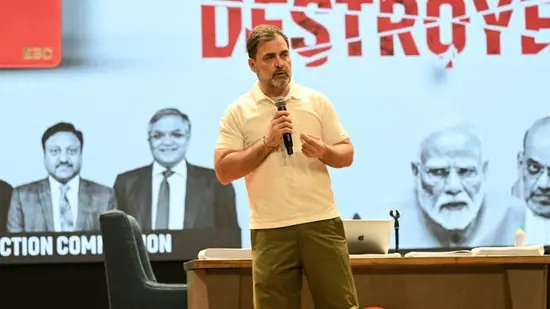
After the 2024 Lok Sabha elections, Rahul Gandhi and the overall INDIA opposition coalition claimed discrepancies in many states, but did not specifically mention Karnataka in those claims. Their objections were around matters of delays in announcing results, disparities between VVPAT slips and EVM counts in a few booths, and what they termed as suspicious voting trends. Rahul Gandhi did not stop at lambasting the Election Commission; he also blamed the central ruling BJP for abusing central agencies and media clout to influence popular opinion and, purportedly, even the election result.
Though these grievances were of national ambit, Rahul Gandhi has previously demonstrated a willingness to confront directly governments and institutions at the state level regarding probing electoral irregularity. Hence, he may seek the Karnataka state government, which is headed by the Congress party, to file or speed up investigations into voter fraud if fresh complaints or instances have surfaced in August 2025. Still, as of now, no credible news sources or official announcements are there to suggest Rahul Gandhi has recently requested Karnataka’s government to probe a new case of voter fraud.
If a recent Karnataka civic body vote, bypoll, or local election has precipitated controversy, and if Rahul Gandhi has reacted to it by issuing a call for an investigation, it may be too fresh to have been widely reported or confirmed so far. Or it could be one of misattribution or political hearsay unless corroborated with a public statement, press conference, or party statement.
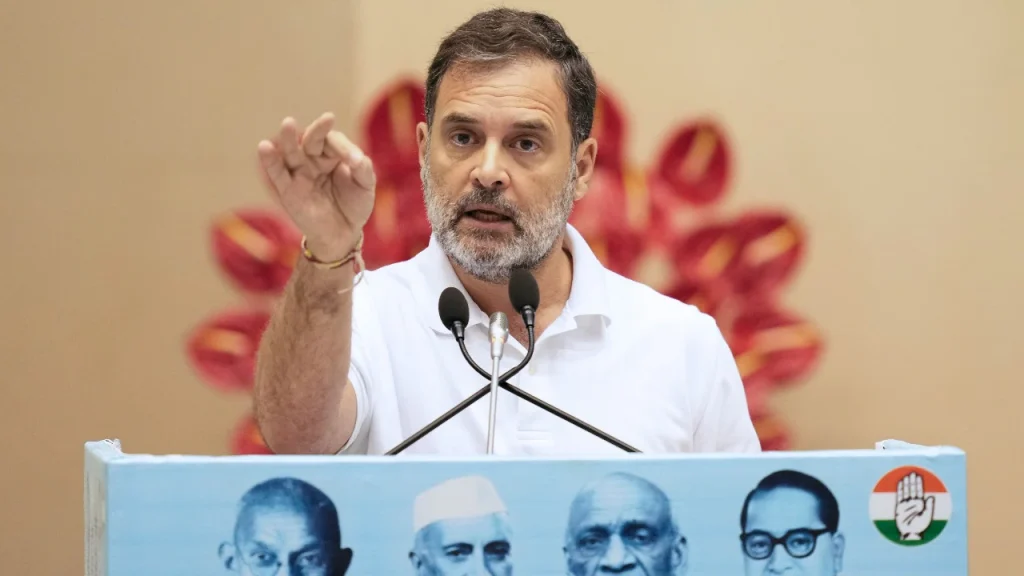
In short, Rahul Gandhi has been firm all along on electoral purity, has backed probes into fraud in voting in Karnataka previously—notably the Chilume Trust scandal—and is bound to do so again if fresh issues do emerge. However, up to now, there is no publicly confirmed report of him calling for a fresh investigation from the Karnataka government on voter fraud in August 2025. If you’ve seen a news report or social media statement suggesting so, it would be worth checking it out via credible news outlets or official Congress party reports. Would you like me to assist in locating the latest reporting on this? Of course.
A detailed account here discussing Rahul Gandhi’s stance on voter fraud, specifically for Karnataka, and if he has requested the state government to probe any such occurrences. Rahul Gandhi, as a senior leader from the Indian National Congress, has raised several concerns regarding the purity of India’s electoral process on numerous occasions. Throughout the years, he has repeatedly denounced what he and his party view as efforts to subvert democracy in the form of electoral misconduct. This encompasses charges of manipulation of Electronic Voting Machines (EVMs), manipulation of voter lists, opposition voice suppression, and abuse of official resources at the polls.
Though these fears tend to be brushed aside by the ruling party as unfounded or politically driven, they are nevertheless at the heart of the Congress party’s public discourse—particularly after elections that see results either surprising or disputed. In the case of Karnataka, these fears have manifested more tangibly in recent years. For the 2023 Karnataka Assembly polls, which the Congress party won convincingly, a series of controversies surrounding manipulation of voter data had arisen. One of the biggest scandals was that of the Chilume Trust, a non-governmental organization that was accused of gathering voter information using the pretext of organizing awareness drives. Investigations uncovered that members of the trust were reportedly altering or erasing voters from the voter rolls, mostly in Bengaluru. Rahul Gandhi, along with the Congress party, reacted sharply to this. Even though the party went on to win the election handsomely, it still insisted on a judicial inquiry into the issue and asked for more vigilance from the Election Commission of India (ECI).
Rahul Gandhi himself endorsed these calls in public by presenting them as part of an overall movement to preserve India’s democratic institutions from being tainted. After the 2024 Lok Sabha elections, Rahul Gandhi and the larger INDIA opposition coalition claimed malpractices in some states, though they did not cite Karnataka explicitly in these accusations. Their grievances were related to such things as excessive delays in announcing results, discrepancies between VVPAT slips and EVM tallies in certain booths, and what they termed suspicious voting trends.
Rahul Gandhi did not stop at criticizing the Election Commission; he also charged the governing BJP with abusing central agencies and media power to shape public perception and, by implication, even the electoral result. Though these grievances were national in nature, Rahul Gandhi has previously demonstrated a willingness to confront state-level governments and institutions directly regarding inquiries into electoral misconduct.
Thus, it is quite likely that he may appeal to the Karnataka state government—currently being led by the Congress party—to establish or accelerate investigations into voter fraud if fresh allegations or incidents have arisen in August 2025. However, up until now, there are no reports from reliable news organizations or official sources stating Rahul Gandhi has recently requested that the Karnataka government investigate a new instance of voter fraud.