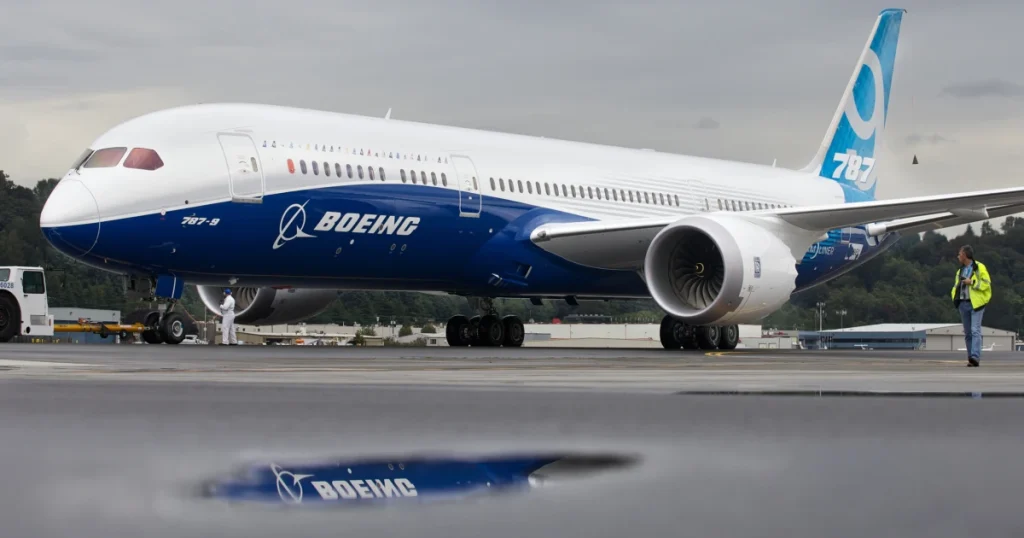
Boeing 787 Dreamliner news revolves around a recent mid-air engine failure experienced by a United Airlines Boeing 787-8 during a flight to Munich from Washington on July 25. The pilots declared a “Mayday,” successfully dumped fuel, and returned safely to Washington Dulles Airport.
This incident follows an Air India Boeing 787-8 crash shortly after takeoff from Ahmedabad on June 12, killing at least 260 people. This was the first fatal crash involving the Dreamliner, raising serious questions about the aircraft’s safety and Boeing’s production quality control. The preliminary report into the Air India accident indicated that fuel switches were found in the “cutoff” position, causing engines to shut down after takeoff. Notably, Air India has conducted additional inspections of the Dreamliner fleet following the crash and found no issues with the fuel control switches. However, the investigation into the Air India crash is ongoing, and the exact cause is still undetermined.
Despite these incidents, Boeing recently reported reduced net losses and increased revenue in their second-quarter earnings, attributed to rebounding jet deliveries, including an increase in 787 production to seven aircraft per month. However, the recent events have intensified the scrutiny of the 787 Dreamliner and Boeing’s safety record as a whole. Concerns about production shortcuts, design integrity, and regulatory oversight have resurfaced, and investigations are underway into both the United Airlines incident and the Air India crash.
Key incidents :-
- United Airlines flight UA108 declares “Mayday”: On July 25, the Munich-bound flight experienced a left-engine failure shortly after takeoff from Washington Dulles International Airport.
- Emergency landing and investigation: The pilots declared a “Mayday”, dumped fuel, and safely returned to the airport, requiring a tow off the runway due to the engine issue. The aircraft remains grounded for investigation.
- Echoes of previous incident: This incident follows a fatal crash of an Air India Boeing 787-8 Dreamliner in Ahmedabad on June 12, which also occurred shortly after takeoff and raised concerns about the aircraft’s safety. The Air India crash killed 260 people.
Broader context :-
- Boeing’s financial performance: Despite these incidents, Boeing reported a reduced net loss and increased revenue in its recent Q2 earnings, driven by rebounding jet deliveries, including increased 787 production to seven aircraft per month.
- Ongoing safety concerns: The repeated incidents have intensified scrutiny on the 787 Dreamliner’s safety and production quality. The Air India crash sparked questions about quality control, design integrity, and regulatory oversight.
- Air India audit findings: A government audit revealed 51 safety lapses at Air India, including inadequate pilot training and issues with unapproved simulators. This raises further questions about the broader context surrounding recent aviation incidents.
- FAA and DGCA involvement: The FAA has opened an investigation into the United Airlines incident. The DGCA has also ordered inspections of fuel control switches on Boeing 787 and 737 aircraft following the Air India crash.