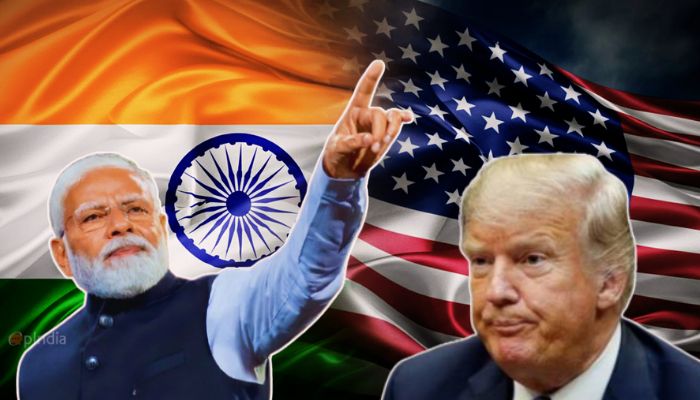
The controversy around Prime Minister Narendra Modi’s handling of relations with the United States has sharpened after former U.S. President Donald Trump decided to impose steep new tariffs on Indian exports. On August 27, 2025, the Trump administration enforced an additional twenty-five percent duty on top of the already existing twenty-five percent tariffs, effectively doubling the rate to fifty percent. This hike has been a body blow to Indian exporters, especially from labor-intensive industries like textiles, gems and jewels, leather, marine products, and engineering goods. These sectors employ millions of people, and the sudden tariff increase is likely to stress jobs, earnings, and economic stability.
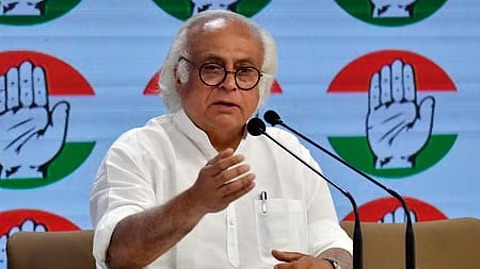
The Congress party pounced on the opportunity to attack Prime Minister Modi in a scathing manner. Party spokesperson Jairam Ramesh recalled Modi’s 2019 rally in Houston where he coined the slogan “MAGA + MIGA = MEGA,” merging Trump’s “Make America Great Again” with his own “Make India Great Again.” Ramesh argued that what Modi had celebrated as a grand partnership has instead become a “MAHA headache” for India. The phrase is meant to underline how Modi’s embrace of Trump has, in Congress’s view, backfired badly. Rather than promoting opportunities, it has resulted in heavier costs and more uncertainty for Indian companies.
In addition to the tariffs, there is growing alarm too about the fate of Indian professionals employed in the United States. The U.S. Commerce Secretary recently called the H-1B visa program a “scam” and maintained that U.S. corporations have a responsibility to ensure that they hire American citizens before hiring foreign workers. For India, this is at the very heart of its international IT labor force, as many of the H-1B holders are Indian software engineers, coders, and technology experts. The comments from Washington have raised panic in India’s technology industry, one which has depended for years on the H-1B visas as the means for its talented labor to be able to work in the US market.
The combination of Trump’s tariff decision and the fresh rhetoric around H-1B visas has allowed the opposition in India to challenge Modi’s foreign policy record. Congress has portrayed the situation as proof that Modi’s highly publicised closeness with Trump has yielded little of substance for India, and has instead exposed Indian exporters and professionals to greater risks. The party has asked the government to explain how it is going to safeguard the interests of Indian companies and workers at a time when the United States seems to be looking inward and pursuing more protectionist policies.
Summary
| Issue | Impact |
|---|---|
| Tariffs | U.S. has raised tariffs on Indian goods to 50%, effective from August 27, 2025, targeting key export sectors. |
| Political Response | Congress ridiculed Modi’s earlier slogan, calling it a burden, and warned of the economic fallout. |
| H-1B Visas | U.S. officials denounced the visa program—raising concerns for Indian IT workers in the U.S. |