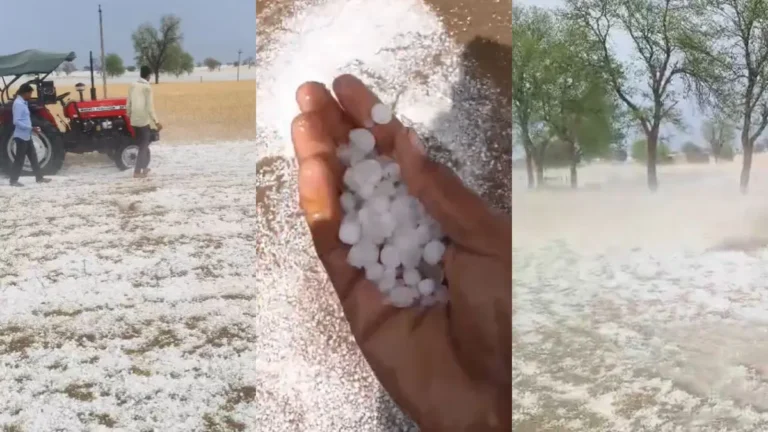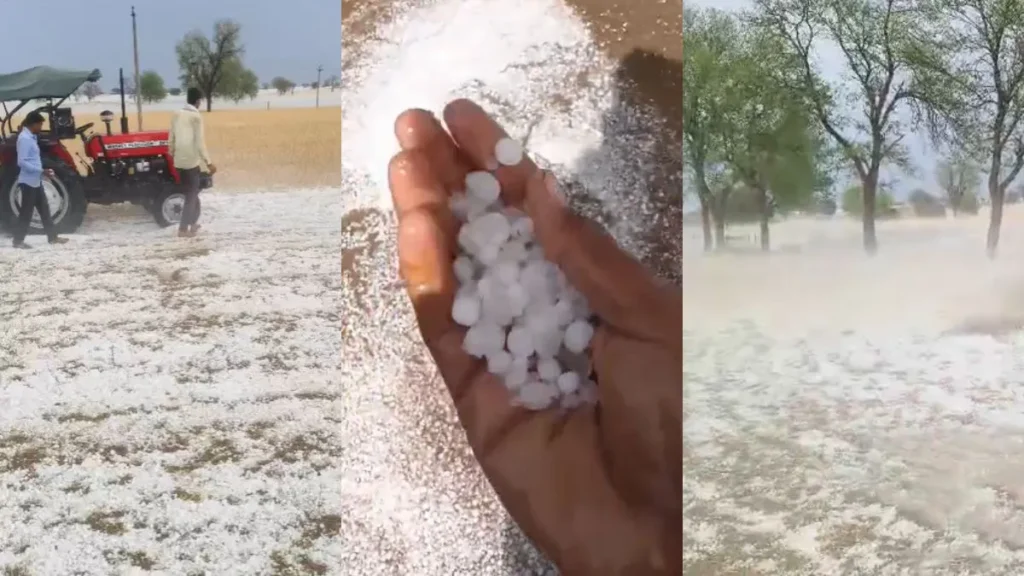
In a surprising weather event, parts of Rajasthan recently witnessed a rare and intense hailstorm that transformed sections of the Thar Desert into a snow-like landscape. Areas such as Bikaner and Jaisalmer saw golden sand dunes covered with thick layers of hail, creating visuals more typical of hill stations than a desert region.
According to recent reports, the unusual weather was triggered by an active Western Disturbance, which brought moisture and instability into the otherwise dry region. This resulted in sudden rainfall, strong winds, and heavy hailstorms across multiple districts.
The hailstorm hit regions like Arjunsar (Bikaner) and Nachna (Jaisalmer), where large hailstones accumulated on the ground, making the desert appear completely white. Residents described the phenomenon as “snowfall-like,” something extremely rare in such arid zones.
Along with hail, strong winds uprooted trees, damaged temporary structures, and disrupted daily life in cities like Jaipur, Ajmer, and Nagaur.
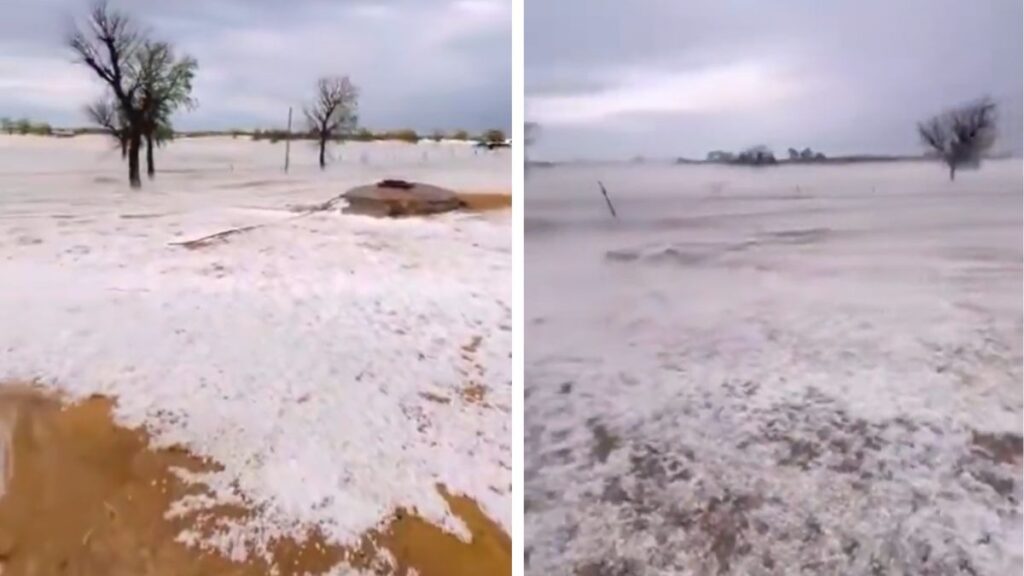
While the visuals were stunning, the impact on agriculture has been severe. Farmers across Rajasthan reported heavy losses, especially in crops like cumin, wheat, mustard, and isabgol that were either ready for harvest or already harvested.
In several areas, fields were completely covered with ice pellets, destroying crops within minutes. The sudden rainfall and moisture also affected crop quality, adding to farmers’ concerns.
The storm brought a noticeable drop in temperatures across the state, offering temporary relief from rising heat. Meteorological experts say such conditions may continue for a few days due to repeated western disturbances, delaying the onset of extreme summer heat.
Rajasthan typically has an arid to semi-arid climate with very low rainfall and high temperatures. Events like heavy hailstorms are rare and usually linked to sudden atmospheric disturbances.
The scale and intensity of this hailstorm have raised concerns about changing weather patterns and increasing climate variability in desert regions.