The Central Government has introduced the Public Examinations (Prevention of Unfair Means) Amendment Bill, 2026 in the Lok Sabha, proposing stricter measures to curb question paper leaks and organized examination fraud. The proposed amendments aim to strengthen the existing 2024 law by introducing tougher punishments, quicker investigations, and dedicated courts for speedy justice.
The move comes after repeated controversies surrounding competitive examinations, including allegations of paper leaks and large-scale malpractice. According to the government, the new legislation is designed to restore public confidence in the country’s examination system by ensuring greater transparency, fairness, and accountability.
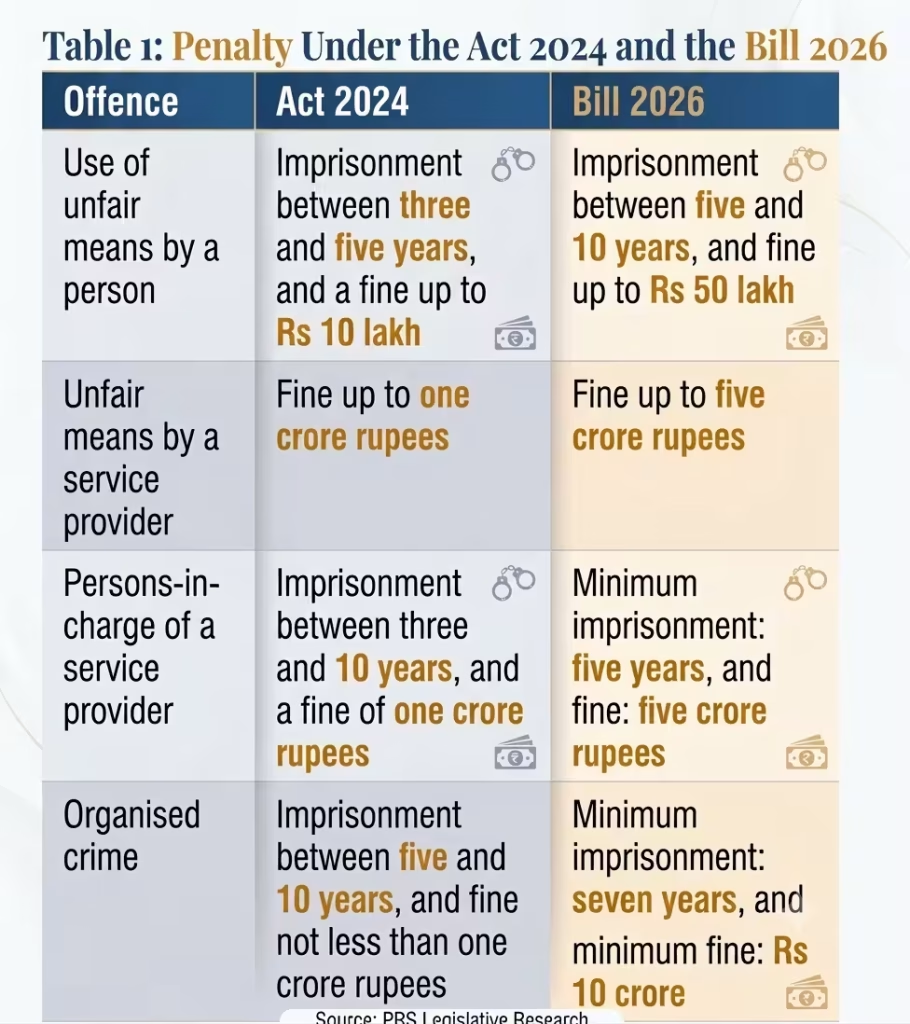
One of the biggest changes proposed is a significant increase in punishment for those found guilty of examination fraud. Individuals involved in paper leaks or other unfair means could face imprisonment of up to 10 years, while the maximum fine may rise to ₹50 lakh. Authorities also plan to impose much harsher penalties on organizations and service providers that facilitate such offences. Examination agencies found complicit could face fines of up to ₹5 crore, while organized criminal networks or institutions involved in paper leaks could be fined as much as ₹10 crore.
The Bill also proposes the creation of Special Task Forces (STFs) to investigate major paper leak cases. These investigations would generally have to be completed within two months, helping authorities respond more quickly to examination fraud.
To ensure faster justice, every state and Union Territory would be required to designate Special Fast-Track Courts exclusively for offences under the Act. These courts are expected to conduct day-to-day hearings and complete trials within three months of the filing of the chargesheet, except in exceptional circumstances. Existing cases under the Act would also be transferred to these dedicated courts.
Another important feature of the proposed law is a dedicated appeals process. Appeals against judgments of the fast-track courts would be heard by a division bench of the High Court, with an effort to dispose of cases within three months. The Bill also allows appeals against bail orders, making the legal process more structured and time-bound.
The proposed amendments focus on creating stronger deterrents against examination malpractice by increasing penalties and reducing delays in investigation and prosecution. If passed by Parliament, the new law could become one of India’s toughest legal frameworks against paper leaks and organized cheating in public examinations.