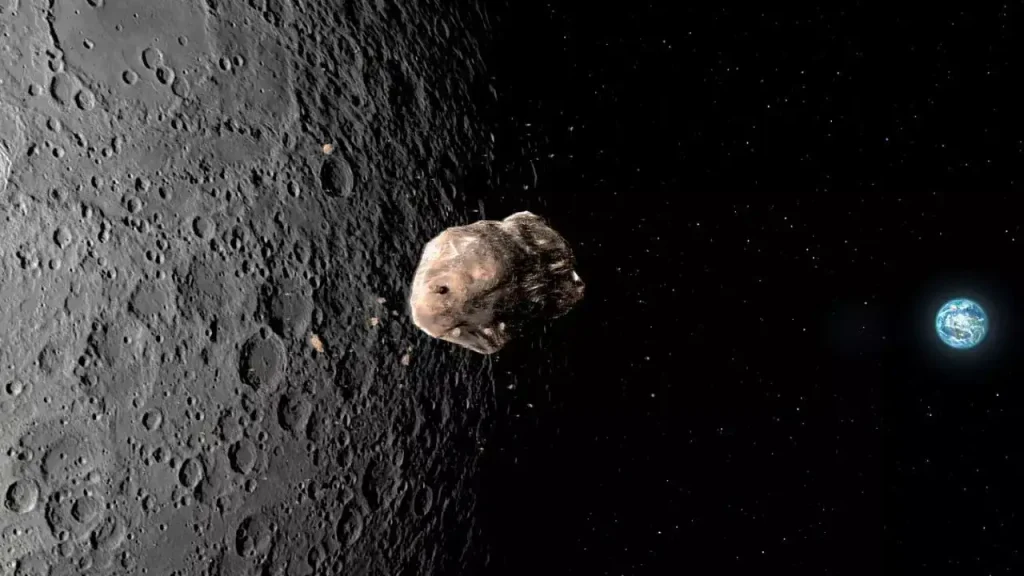
In December 2032, the Earth might experience a once-in-a-lifetime and spectacular heavenly occurrence: a meteor shower composed not of common space rubble, but of debris hurled directly from the Moon. The reason for the chance is the near-Earth asteroid 2024 YR4, whose path has been forecast by astronomers as having a minor but significant probability—about 4 to 4.3 percent—of colliding with the Moon on December 22, 2032.
Asteroid 2024 YR4 was first seen in late 2024 and is between 53 and 67 meters in diameter. That puts it in the same ballpark size as the asteroid that is thought to have led to the huge Tunguska explosion in Siberia back in 1908. While the initial worry was about whether or not it might hit Earth, further monitoring assured that our world is not in its direct trajectory. But now calculations show the Moon is inside its possible impact zone.
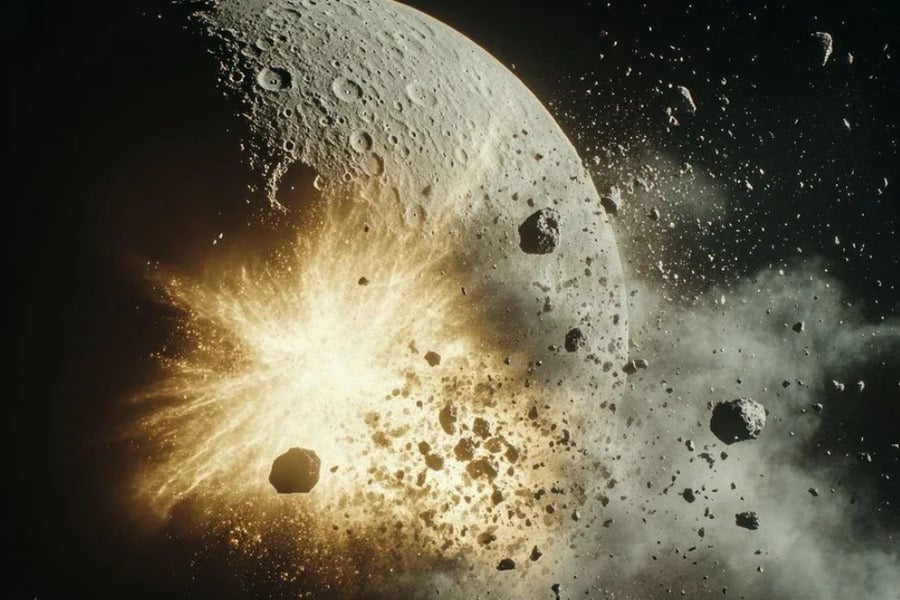
If the asteroid were to impact the lunar surface, it would release energy of five to six-and-a-half megatons of TNT. The impact would excavate a crater about one kilometer in size, which would be the largest new crater on the Moon in approximately 5,000 years. But more than reworking the Moon’s surface, such an impact would send as much as 100 million kilograms of lunar dust and rock into space.
A significant fraction of that lunar ejecta—potentially up to 10 million kilograms—could be pulled into Earth’s gravity within just a few days. As these fragments enter Earth’s atmosphere, they may create a unique meteor shower, composed entirely of Moon-originating material. Scientists believe that the meteor shower would appear quite different from typical ones. The moon dust would move slower and potentially be fainter than typical meteors, but they would survive longer in the air and occur in unusually large quantities. Some predict the display could even be seen by the naked eye or through simple binoculars, providing a once-in-a-lifetime spectacle.
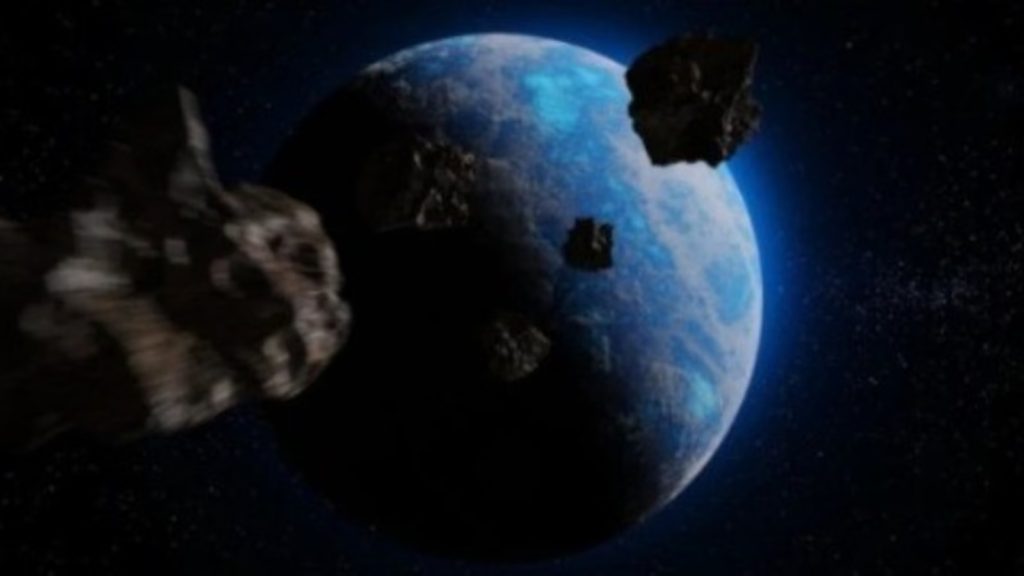
The display, though, is not merely a possible marvel for astronomers. It has important consequences for space-based infrastructure and satellites. Although the debris on the moon does not endanger humans on Earth, tiny pieces measuring between millimeters and centimeters in size may hit satellites in low Earth orbit at high velocity. With the unprecedented size and uncertainty of this debris cloud, officials caution that such a disaster would have a disastrous effect on satellite communications, navigation systems, and even space missions in Earth orbit.
At present, the asteroid is not visible to Earth-based telescopes, so it is hard to make accurate predictions. Still, scientists anticipate that it will reappear in 2028, when its location will permit more accurate measurements. These future observations will be important in making more precise predictions of its forecasted path and analyzing if it will, in fact, crash into the Moon.
Overall, the effect of asteroid 2024 YR4 upon the Moon—if it happens—can be both a spectacular sight and a valuable scientific occurrence. It may produce an unparalleled meteor shower on Earth, consisting only of lunar debris, while at the same time presenting our increasingly congested orbital environment with some issues. For the time being, the world waits and observes until 2028, when astronomers shall have their next opportunity to decide if this unusual cosmic situation shall indeed come to pass.